
You forget new German words because memory drops fastest in the first hours after you learn something, especially if that something is rather abstract and deprived of context.
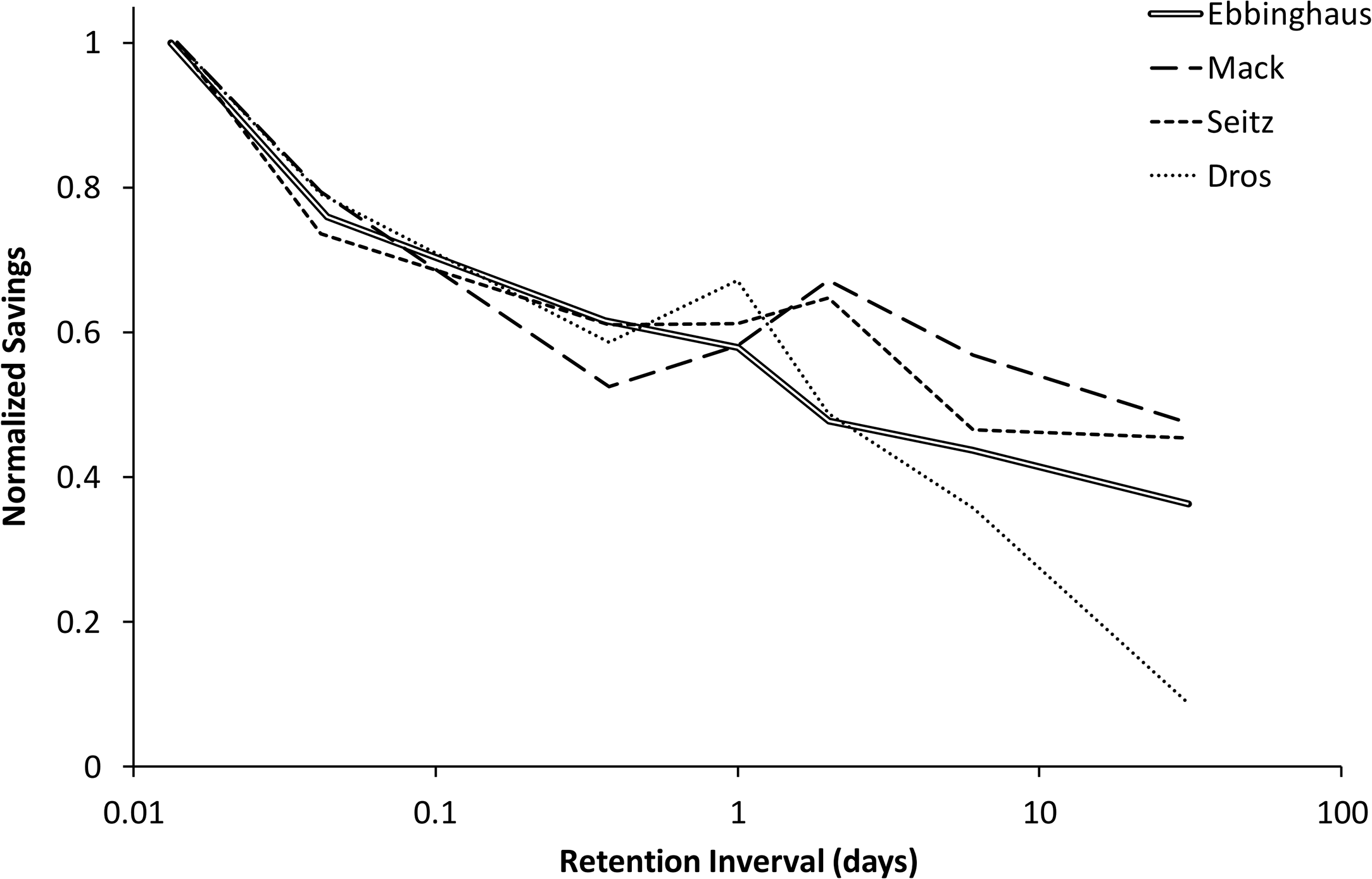
German scientist Hermann Ebbinghaus measured how memory dropped after learning nonsense syllables in the 1880s, and a 2015 replication found a very similar curve.
The fix is short reviews at the right moments: the same evening, the next day and a few days later. That is what vocab apps call a spaced repetition system, or SRS for short. Those review times are a practical starting point, rather than a schedule the study tested.
So, you learned twenty words on Monday. By Wednesday, maybe eight are left. Sound familiar? That is an example, not a prediction from the study. If you are learning isolated vocabulary, your brain may be working exactly as expected.
Let me show you how to improve your vocab retention.
What the forgetting curve really shows
Ebbinghaus learned lists of nonsense syllables and documented his forgetting curve. Think of learning German words like nun, ab, Widerstand, Gegner, verlobt. If you have never seen these words before, you cannot make sense of them yet. They can feel like nonsense to you.
German words do have meanings, so this is an analogy, not the same experiment. But learning unfamiliar sounds without context gives your brain very little to hold on to.
Ebbinghaus also checked how quickly he could relearn the syllables later. The less time relearning took compared with the first learning session, the more he had kept. This is called savings.
In 2015, Jaap Murre and Joeri Dros repeated the experiment: one person, 70 hours of learning and relearning, with gaps ranging from 20 minutes to 31 days. The result looked very much like the original from the 1880s.
The researchers also found evidence of an upward bump around the 24-hour mark. Sleep is a possible explanation they discuss, but their experiment did not establish that sleep caused it.
Yes, many German words are easier: they mean something, and many have English cousins like Hand, Finger and Haus. But if you do not review them, for example by using them frequently, you can still forget them.
Their sounds are often different, too. German Hand has a different vowel from English hand, and its final d sounds like a t. Think of English hunt as a rough reminder of that final sound, not an exact pronunciation guide. Listen to the German word rather than relying on its spelling.
The general pattern is useful. The exact curve is not a forecast for your vocabulary.
Why cramming feels good and works badly
An hour of vocabulary on Monday can feel productive. You finish the task, you remember every word, you close the app. Then the curve does its thing. Cramming gives you one big encounter with the words and leaves the next encounter to chance.
5 solid tips to remember German words better
- Work in shorter sessions, more frequently. My recommendation: aim for three ten-minute sessions a day instead of one thirty-minute session a day or an hour every other day.
- Use an app. Try Anki or the built-in vocab tool in my online German courses. Both use spaced repetition, so you do not have to remember when to review your vocab. My recommendation: never use paper flashcards for vocab training. Let the app handle the timing.
- Use my decks on Anki. Here is why: they provide context through three sample sentences at different levels, nice-sounding audio of the word and sample sentences, and a strong mnemonic device and image. Find my SmarterGerman decks here.
- Do not create your own decks. It takes too much time, and the quality will be poor unless you invest a lot of time. To reach the quality of my decks, you would pay far too high a price in study time. If you do make your own cards, keep them quick and dirty: table = der Tisch. No plural, no genitive, no sample sentences unless you copy them from a native speaker's text.
- Read a story and study its vocabulary. You could read a story that contains the words you are learning. Better still, do it the other way round: read a story and study the vocab from that story. Why? Because that makes the words useful, and your brain loves useful stuff. It also makes them urgent: you want to understand the story. That is a strong reason to pay attention.
What this means for your German
You cannot pull the grass to make it grow faster, but you can prepare the ground with context and urgency, and add the right kind of fertilizer: sample sentences, audio and mnemonics.
Reviewing and recalling are crucial parts of learning, not mere maintenance.
That is why the dashboard in my courses has a Review button that brings back the exercises you got wrong.
If you like memory tricks on top, here are five mnemonics that work for German.
Take ten words from this week. Test yourself tonight, tomorrow and on Friday. Count how many survive. Then tell me the curve was wrong.
Source: Murre, J. M. J. and Dros, J., 2015. Replication and Analysis of Ebbinghaus' Forgetting Curve. PLOS ONE.


